
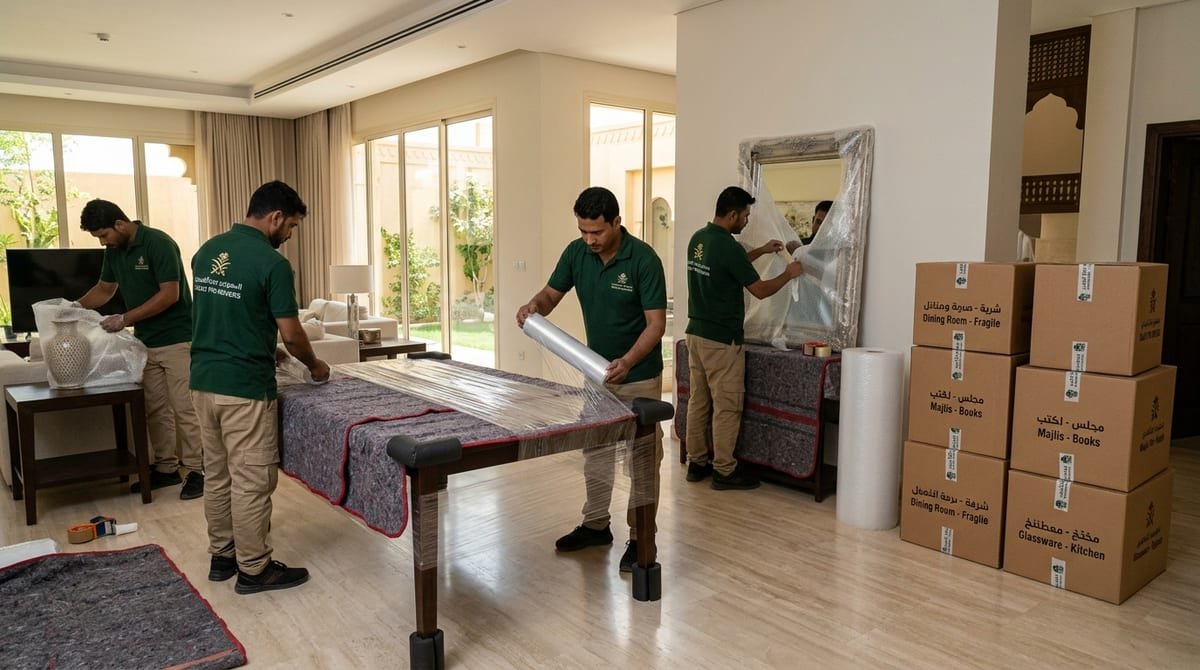
What this page covers: packing and moving glassware, crystal, fine china, serving sets and small glass ornaments. For kitchen contents in general (pots, small appliances, spices), see kitchen packing and moving. For glass tables and large mirrors, see glass table and mirror moving.
Why glassware breaks during a move
Most breakage is not caused by the road itself but by mistakes inside the box:
- Empty space in the box: items move and knock together at every bump.
- Boxes that are too big and heavy: the base weakens, or the box is carried badly or dropped.
- Direct contact: glass touching glass with nothing in between.
- Wrong orientation: plates stacked flat carry all the weight above them, while plates on edge spread the pressure.
- Unmarked boxes: placed under heavy boxes because nobody knows what is inside.
Materials we use
| Material | Use |
|---|---|
| Clean, ink-free packing paper | First wrap for every item, so nothing gets marked or scratched |
| Bubble wrap | Second layer for crystal and very thin pieces |
| Small and medium sturdy boxes | So no box becomes heavier than it can take |
| Cardboard dividers | For glasses and cups, one cell per item |
| Soft filling | To fill gaps at the top and sides |
| Tape and markers | Secure closing and clear "fragile" and "this way up" labels |
How we pack each type
Glasses and crystal tumblers
We stuff the inside with crumpled paper, wrap the outside, then stand each glass in a divided box. Stemware gets an extra layer around the stem.
Plates and platters
Each plate is wrapped on its own, then three or four are bundled and placed on edge in the box like files in a drawer, with a layer of filling at the base.
Arabic coffee cups, dallahs and coffee sets
Small cups are wrapped and placed in cells. Dallahs and flasks are emptied, dried and wrapped separately, with extra protection on spouts and handles.
Glass ornaments and vases
Filled inside and wrapped in two layers, packed alone or with light items, and the box is labelled with its contents.
Small chandeliers and lamps
We separate hanging glass and crystal parts and wrap each one. Taking a ceiling chandelier down and putting it back is electrical work, so we recommend an electrician removes it before moving day; we then pack and move its parts.
Inside the truck
Fragile boxes never go at the bottom or under heavy items. They travel at the top or in a dedicated area between soft pieces, secured so they cannot slide. For intercity moves we add more layers because the road is longer. See intercity moves.
If you have sets of special or family value, tell us when you book so we can set aside boxes and extra packing time. It is best if you are present while they are packed.
On arrival: open fragile boxes first
At the new home, boxes marked fragile come in first and go to a safe spot away from walkways, with nothing stacked on top. We suggest opening them yourself or with us present, and checking items before throwing away the filling, because small pieces such as sugar-bowl lids and serving spoons can hide in the paper. If the display cabinet is being reassembled, we set it up and secure it first, then you can arrange your pieces using the photos you took before the move.
What you can do yourself
- Empty display cabinets before moving day, or leave them to us to pack in order.
- Gather incomplete or unused sets and decide whether they are worth moving.
- Photograph your cabinet layout so it is easy to recreate.
- Never put valuable glassware in the same box as heavy items.
For general preparation, see moving preparation checklist. For packing in your city, see furniture packing in Dammam or furniture packing in Khobar.
Request fragile packing and moving
Tell us roughly how many sets or display cabinets you have and your city.