
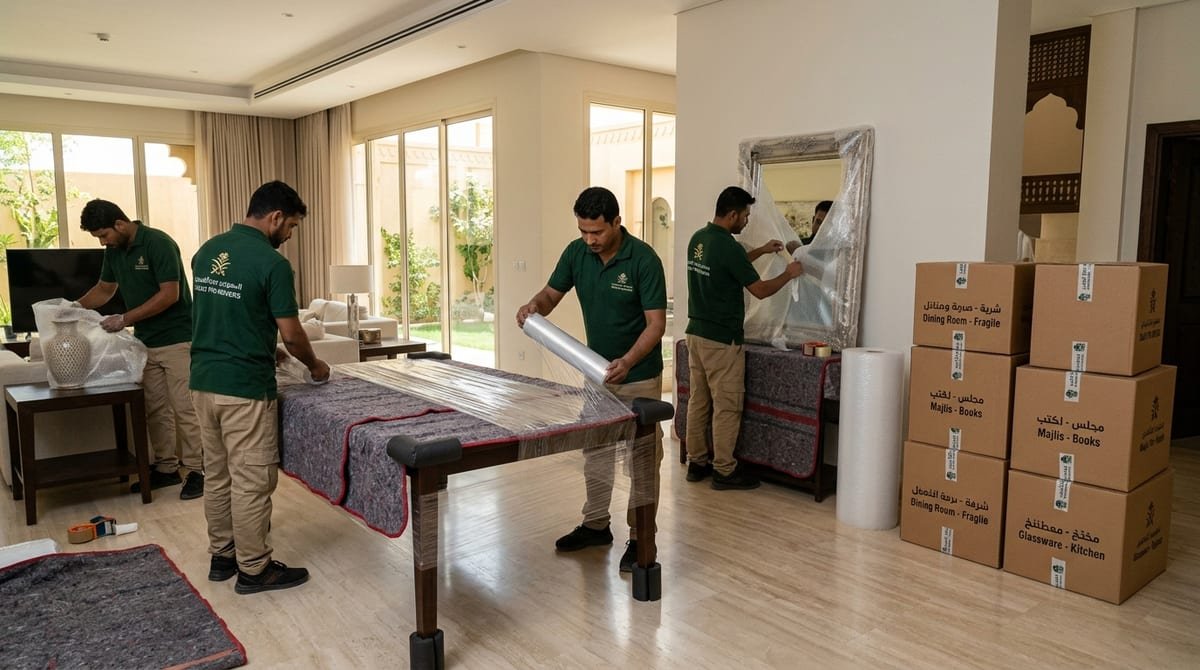
Why the Kitchen Needs Its Own Packing Plan
In most homes the kitchen has the highest number of items: plates, glasses, cups, pots, glass dishes, spice jars and small appliances. Most of them can break or leak. The common mistake is throwing them into large boxes without dividers, so they arrive broken or leak onto the rest of the furniture. That is why we treat the kitchen as a separate packing stage.
How Each Kitchen Item Is Packed
| Item | Packing method | Box type |
|---|---|---|
| Plates | Each plate wrapped in paper and stood on its edge, never stacked flat | Small to medium heavy-duty |
| Glasses and cups | Each piece wrapped alone, inside stuffed with paper, cardboard dividers | Divided box |
| Pots and pans | Nested by size with paper between; lids wrapped separately | Medium |
| Glass dishes and ceramics | Two layers of bubble wrap and corner guards | Small heavy-duty |
| Knives and cutting tools | Blades wrapped in taped cardboard; box labelled with a warning | Small |
| Spices and liquids | Lids tightened and taped, sealed bags inside the box | Small lined |
The Golden Rule: Small Boxes, Heavy at the Bottom
A big box full of plates becomes too heavy and its base gives way. We use small or medium boxes for heavy items, put the heaviest at the bottom and the lightest on top, and fill every gap with paper so nothing moves. Each box is labelled: kitchen, contents, "fragile" where needed, and this side up.
The first-night box: pack one box with what you need on day one: kettle, mugs, a few plates, cutlery, opener, washing-up liquid and bin bags. We load it last and unload it first.
Small and Large Appliances
Small appliances such as blenders, toasters, coffee machines and microwaves go in their original boxes if you have them, or a lined box with cables coiled and secured; the microwave glass plate is removed and wrapped alone. Fridges, freezers and cookers need their own preparation, covered in appliance moving. Disconnecting and reconnecting gas and plumbing are not part of our services, so arrange a specialist before and after the move.
Kitchen Cabinets and Tables
If you have a dining table or free-standing kitchen units that can be dismantled and need moving, we dismantle, number and reassemble them at the new home. For fitted cabinets connected to plumbing or fixed countertops, we need photos first to tell you what we can take apart and what needs another specialist.
What You Can Prepare Before We Arrive
- Use up opened food in the days before the move and throw away anything expired.
- Sort duplicate or unused kitchenware and donate it instead of moving it.
- Empty, clean and dry the fridge the day before.
- Gather valuable sets in one place so we can give them extra care; for very valuable pieces see luxury and antique moving.
To spread the rest of the house over several days, use our moving preparation checklist.
Kitchen Packing as Part of a Move or on Its Own
We can pack the kitchen as part of a full house move, or pack only the kitchen while you handle the rest. Either way we bring boxes and materials and mark kitchen boxes with a distinct label so they go straight to the kitchen at the new home. Packing levels are explained in our furniture packing guide.
Unpacking Quickly in the New Home
Open the first-night box first, then plates and cups, and leave seasonal cookware and fine sets until last. Labelling boxes by cupboard makes setting up the new kitchen much faster.
What Decides the Cost?
Kitchen size and amount of kitchenware, how much glass and fragile items, number of small appliances, and whether packing is part of a full move or standalone. Send photos of open cupboards on WhatsApp for a written quote.
Get a Quote for Kitchen Packing
Send photos of your open kitchen cupboards and your city, and tell us if it is part of a home move; we will reply with a written price.