
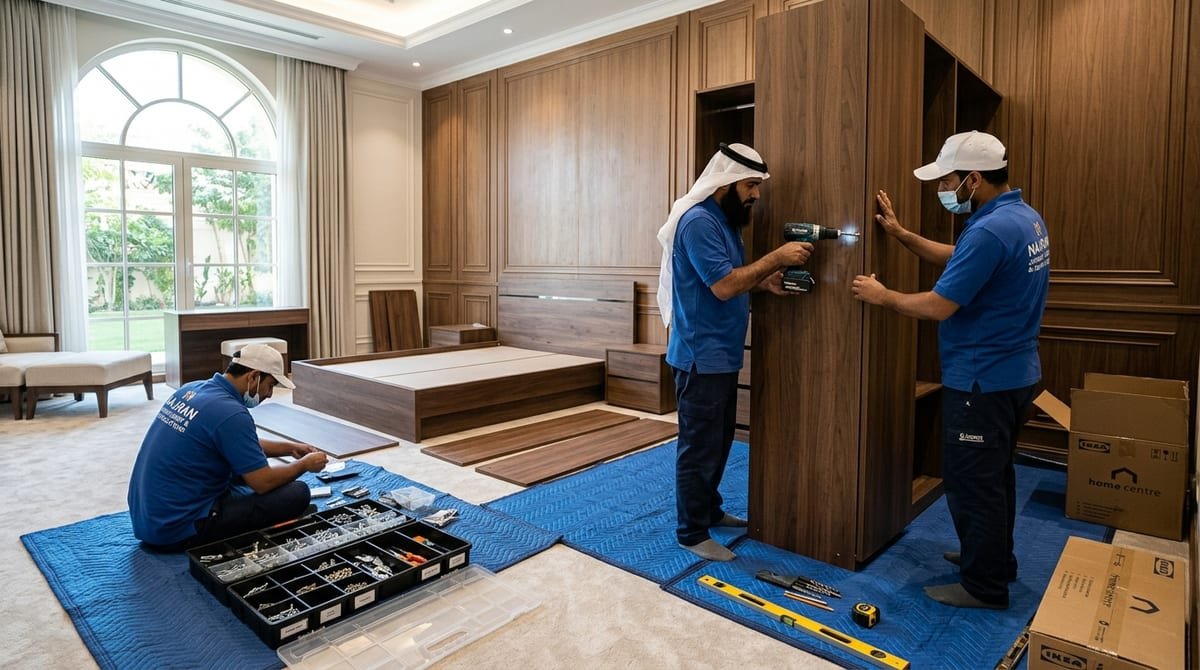
Scope of this page: This page is about moving beds and mattresses specifically. For a whole bedroom see bedroom set movers, for children's rooms see furniture assembly and for packing materials see furniture packing.
Why beds and mattresses need special handling
The mattress is the item people worry about most for cleanliness. It is large and fairly light, so it picks up dust, stains and scuffs easily if carried uncovered. The bed itself is about details: small screws, wooden slats, posts, and sometimes a drawer or storage box under the mattress, all of which get lost or broken if taken apart without a system.
So we treat moving a bed as a small project with steps: measure, dismantle, wrap, load, unload, then reassemble. We never carry a mattress along a dirty floor, and we never tie it with a rope that squeezes its side.
Bed types and how we take them apart
A different bed type changes how we dismantle it:
- Wooden bed with posts: we remove the posts and side rails, keep matching parts together and mark them.
- Metal bed: we protect the metal ends from scratches and wrap long pieces in bubble wrap.
- Bed with storage box: we empty it first and move the box separately to reduce weight.
- Children's bed or bunk bed: we take it apart completely, because its size and height make moving it assembled hard and risky.
Screws: the smallest part and the biggest problem
The most common complaint we hear after someone else's move is lost screws. So we place each bed's screws and small parts in a sealed clear bag, write the room on it, and tape it onto one of the bed's own boards rather than into a box that gets separated. If special tools are needed, such as an Allen key, they go in the bag too.
Mattresses: the type decides the method
Not all mattresses are the same:
- A spring mattress is never folded or bent, so the inner structure is not damaged; it moves flat or on its side in a cover.
- A foam mattress may be rolled only if its type and the maker's instructions allow it; otherwise it moves flat.
- A medical mattress needs protection from pressure on its sides and is never left under a heavy item.
- In every case we use a protective mattress cover and never leave it exposed in the truck.
How we place them in the truck
Loading order affects mattress safety: mattresses stand on their side against the truck wall and are tied gently, or lie on flat items, never on sharp ones. Nothing heavy and no metal tools go on top. Bed boards are wrapped in bubble wrap and kept away from rubbing against appliances.
Unloading and reassembly at the new home
We start with the main bedroom or the first room you need, assemble the frame first and place the mattress once the bed is steady. The mattress stays in its cover until you decide to open it. If you want a wider move, see our furniture assembly pages for Dammam, Khobar, Jubail and Qatif.
What we need from you
Send us the number of beds and their sizes, the mattress type (spring, foam or medical), any storage boxes or bunk beds, the floor and lift, and photos of any unusual bed. That lets us estimate time and crew accurately.
Request a quote for moving beds and mattresses
Tell us how many beds, their sizes, the mattress type and your preferred date.